Built to Last
Approach
Most people try to grow by doing more. More effort. More structure. More intensity. And for a while, that works. Progress comes, things improve and it feels like you are moving in the right direction. Until it becomes harder to sustain.
Because at a certain point, growth stops being about what you are doing and starts being about how you are able to stay with it over time.
Consistency becomes less about discipline and more about how you respond when the process loses clarity, when motivation fades, or when results take longer than expected. What holds is not intensity in isolated moments, but the ability to remain present, to adapt and to continue when it would be easier to step back.
This is not fast work. It is not designed to be. But it is the kind of work that changes how you operate — and that is what allows progress to last.
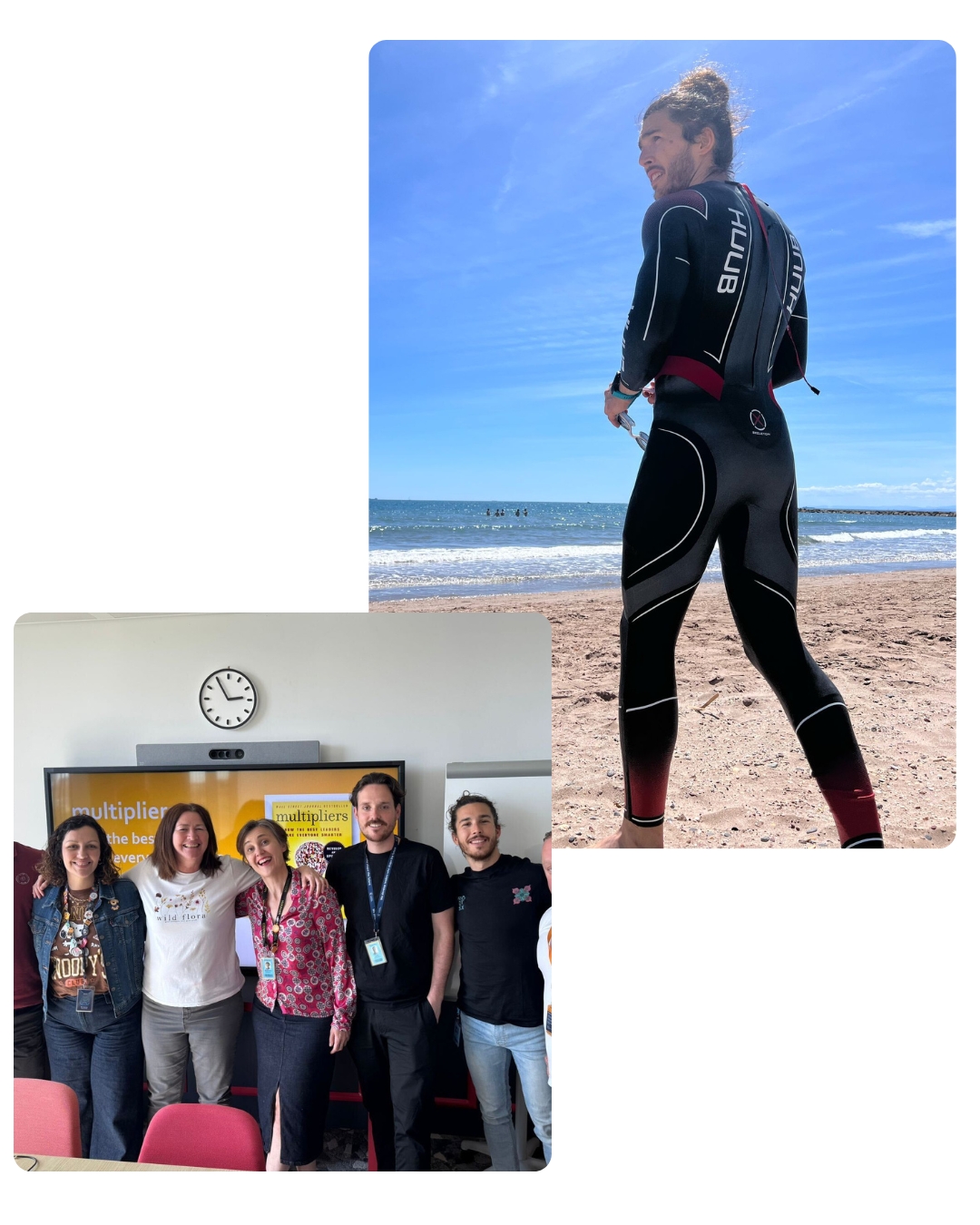
One System. Two Expressions. Compounding Growth.
Leadership and Endurance sports are often approached as if they belong to completely different worlds.
- One is framed around people, decisions and responsibility.
- The other around training, effort and physical demand.
But that distinction becomes less meaningful the moment pressure enters the picture. Because in both, what ultimately matters is not the context, but the response.
The way you deal with discomfort when training is rarely isolated from how you deal with pressure when leading. The way you handle uncertainty in decisions often mirrors how you handle doubt when a long-term challenge stretches you beyond what feels comfortable. The situations are different. The demands look different. But the underlying pattern is the same.
You do not need to work on both for this to be relevant. But when you begin to change how you respond in one area, it naturally carries into the other — not because they are the same discipline, but because they rely on the same system. That is why my approach brings the best of both worlds together — so you can develop a way of responding that holds, regardless of the context you’re in.
What We Stand For
This work is grounded in a different understanding of progress. Not as something driven by intensity or short bursts of effort, but as something that is built gradually, through repetition and continuity. What we stand for is simple, but not easy:
- Consistency over intensity — not the occasional peak, but the ability to return, again and again, even when it’s not convenient
- Awareness over reaction — understanding how you respond, instead of being driven by it
- Resilience over avoidance — staying with the challenge, rather than stepping away when it becomes uncomfortable
- Clarity over impulse — acting with intention, especially when things are uncertain
- Long-term progress over short-term results — building something that holds, not something that fades
These are not abstract ideas. They are the foundations of a way of operating that allows you to grow — consistently and over time.
What We Don’t Entertain
There are many approaches that promise progress. Most of them rely on the same assumptions: that growth can be accelerated, simplified, or bypassed. This is not that kind of work.
- No shortcuts — anything that avoids the process rarely holds under pressure
- No quick fixes — because real change takes repetition, not isolated insight
- No “hack your way through it” thinking — because optimisation without depth breaks over time
- No reliance on motivation as a strategy — because motivation is unstable by nature
- No promises of fast or effortless results — because those are not conditions you can rely on
This is not about making the challenge easier. It is about becoming someone who can stay with it — especially when it is not.
Where the Work Actually Happens
This work does not exist in theory. It takes shape in what is already happening for you. In the moments where you hesitate, where you push beyond what is sustainable, where you lose clarity, or where you disengage without fully realising it. We work with those moments directly.
We slow them down, understand what is happening beneath the surface and look closely at how you interpret and respond to them. From there, we begin to build alternative ways of approaching those same situations — ways that are more stable, more intentional and more aligned with long-term progress.
The tools we use — visualisation, conscious and self-regulated self-talk, Neuro-Linguistic Programming (NLP), anchoring, and heart coherence (among others) — are not the focus in themselves. They are simply ways to develop control over your internal state, so that your response becomes something you can rely on, rather than something that fluctuates.
Over time, the shift is not only in what you do, but in how you operate. Growth, at this level, is NO longer about doing MORE, but about responding differently — and learning to stay with the process when it becomes difficult. That is what allows progress to continue. And that is what makes it LAST.