
A complete system for sustainable triathlon performance
THE 336 METHOD
336 Triathlon. A Proven Method for Sustained Growth.
A logical, evidence-based system for sustainable performance
The 336 Triathlon Program is built on a simple truth: performance is never accidental. It is the result of understanding how the body adapts, how the mind responds under stress, and how consistency is sustained over time. This program exists to bring order, logic, and intention to a sport that is often trained with effort, but without structure.
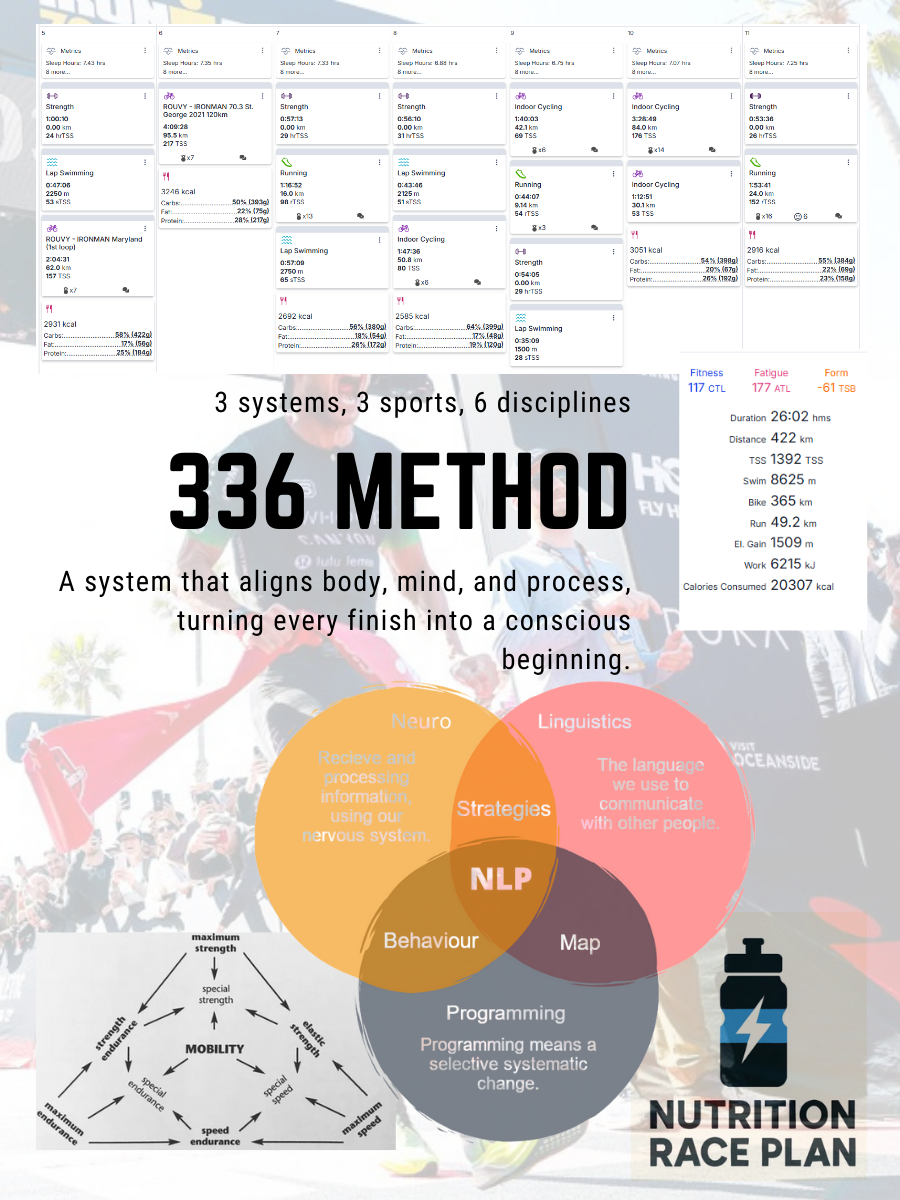
The name 336 reflects the architecture of the method. Three activities define the sport. Three physiological systems define how performance is produced. And Six key areas define whether an athlete actually reaches their goals in a healthy, sustainable way.
sports to master
ways of working
disciplines to learn
The visible structure of triathlon
The 3 Sports: Swim, Bike, Run
Triathlon is defined by three sports or disciplines (as you want to name them): swim, bike, and run. They are the external expression of the sport and the most obvious focus of training. However, performance in these disciplines is not determined by isolated fitness, but by how intelligently they are developed and connected. In the 336 Program, swim, bike, and run are trained as an integrated system. Efficiency in the swim preserves energy for later stages. Smart power management on the bike protects the run. Running performance is the result of everything that came before. Training respects this sequence, ensuring that improvements in one discipline support — rather than compromise — the others.

Swimming — control in uncertainty
The main challenge in swimming is not only physical, but mental. Open water conditions, lack of visual reference, contact with others, and breathing control often trigger anxiety. Learning to stay calm, efficient, and present under uncertainty is what transforms swimming from a threat into a strength.

Cycling — intelligence under load
Cycling is where races are often won or lost. The challenge lies in managing effort over time: pacing, power control, nutrition, and decision-making under fatigue. Riding too hard too early compromises everything that follows. True mastery on the bike comes from restraint, awareness, and discipline.

Running — resilience after fatigue
Running in triathlon is rarely about pure speed. It is about resilience. The challenge is maintaining form, focus, and confidence when the body is already fatigued. This discipline demands mental toughness, emotional regulation, and the ability to keep moving forward when discomfort becomes unavoidable.
The internal engine behind performance
The 3 Physiological Systems
If the three disciplines are the structure, the physiological systems are the engine. Understanding and training these systems is what transforms effort into performance and consistency into progress. Many athletes train intensities without understanding what they are developing. The 336 Program replaces guesswork with intention.
The Aerobic System
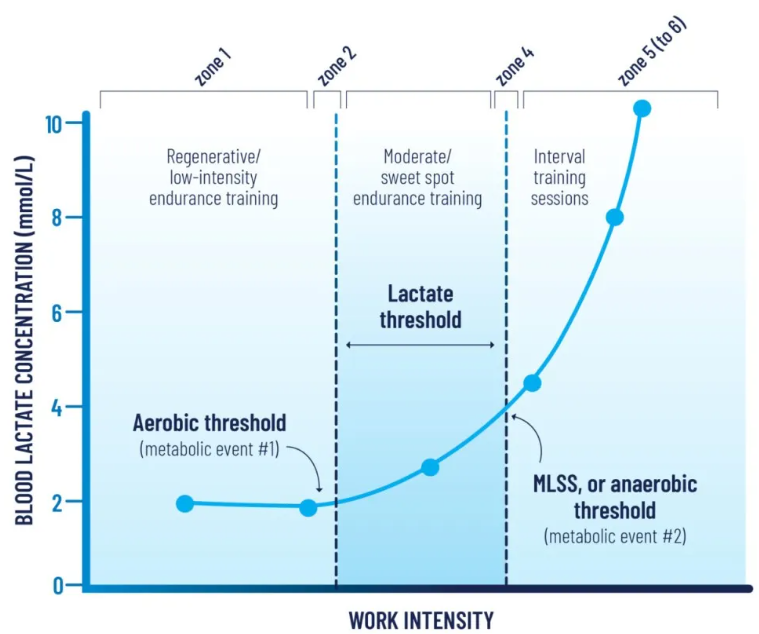
The aerobic system is the foundation of endurance. It governs how efficiently the body uses oxygen, how well it recovers, and how much training it can absorb. Long aerobic sessions, steady efforts, and controlled easy training build this system. A strong aerobic base allows athletes to train more frequently, recover faster, and perform longer without breaking down.
The "High" Aerobic System
The high aerobic system sits between endurance and intensity. It determines how long an athlete can sustain demanding efforts close to race pace. Training this system improves lactate clearance, pacing control, and the ability to stay efficient when intensity rises. This is where races are truly executed, not through maximal effort, but through controlled strength
The Anaerobic System
The anaerobic system prepares the athlete for stress. Surges, hills, accelerations, transitions, and moments of fatigue rely on this system. Training it develops the ability to respond without panic, maintain form under pressure, and recover quickly after intense efforts. It is not trained to suffer more, but to remain composed when conditions are no longer comfortable.
The 6 disciplines
What truly determines success
Triathlon is often described as a sport of distances, paces, and numbers. But beneath the metrics lies something deeper. Every discipline you train reveals something about how you respond to uncertainty, fatigue, pressure, and commitment. What follows is not just a breakdown of what you train, but an invitation to understand why each discipline matters and how, together, they shape performance — and the athlete behind it.
Swim · Bike · Run — where effort becomes identity
As explored earlier, swim, bike, and run are the visible expression of triathlon, yet their impact goes far beyond physical execution. Swimming challenges your ability to stay calm in the unknown, to breathe and move with trust when control feels limited. Cycling becomes a lesson in patience and intelligence, asking you to manage effort, ego, and nutrition over time. Running is where truth appears — when fatigue strips everything down and resilience, focus, and belief determine how you move forward. Trained together, these three disciplines create flow. Trained in isolation, they create imbalance. In the 336 approach, they form one continuous story.
Nutrition — the invisible fuel of consistency
Nutrition is not about rules or restriction. It is about understanding how to support effort, recovery, and adaptation. Learning when and how to fuel long sessions, how to recover effectively, and how to use supplementation intelligently transforms energy from something unpredictable into something reliable. When nutrition is trained with intention, performance becomes sustainable and the body learns to respond, not resist.
Mind — the discipline behind every decision
Every session, every race, every moment of doubt is filtered through the mind. Focus, emotional regulation, confidence, and decision-making are not traits — they are skills. Training the mind allows athletes to remain present under pressure, manage discomfort without panic, and choose clarity over reaction. The mind is not a backup system. It is the one that governs them all.
Transitions — moments that reveal preparation
Transitions are where preparation is exposed. Moving between disciplines under fatigue demands awareness, adaptability, and decisiveness. These moments may look small, but they carry disproportionate impact. When transitions are trained, movement becomes fluid and confidence remains intact. When they are ignored, energy and focus are quietly lost.
Strength — the structure that sustains ambition
Strength training builds the physical structure that allows endurance to exist without breaking down. It reinforces posture, improves efficiency, and protects the body from repetitive stress. A strong body tolerates training better, recovers faster, and remains reliable across long seasons. Strength is not about lifting more — it is about lasting longer.
Mobility — freedom that protects longevity
Mobility is what allows the body to move as it was designed to. Maintaining joint freedom, tissue quality, and movement control reduces compensation and preserves efficiency. Mobility work protects the athlete’s ability to train consistently over time, ensuring that progress does not come at the cost of longevity.
Beyond Limits
Beyond Doubt
Beyond Pain
Beyond Self
From systems to performance, from structure to confidence
How the work comes together
The way I work is simple in concept, but deep in execution. Performance is built by developing the physiological systems that drive adaptation, while simultaneously supporting the disciplines that allow that adaptation to translate into results. Every athlete, regardless of distance or experience, trains across the three physiological systems — aerobic, high aerobic, and anaerobic — but the way these systems are intensified and combined is always intentional. Long aerobic work builds endurance and efficiency. High aerobic efforts sharpen race-specific strength and control. Anaerobic work prepares the athlete for stress, surges, and decisive moments. None of these systems are trained in isolation. They are layered progressively to create durability, not fragility. This physiological structure is what allows the six disciplines to evolve coherently.

One method. One journey. Full support.
This program is offered as a continuous coaching process or goal focus, not as disconnected services. The goal is to support the athlete end to end — across training, mindset, nutrition, and execution — using a structured, evidence-based method that adapts as the athlete evolves.
Everything is built around the 336 framework, combining physiological development, technical preparation, and mental training into one coherent system.
You may expect:
– In person / online coaching sessions (as agreed per week)
– Personalized swim, bike, and run training plan (TrainingPeaks)
– Training delivery and monitoring
– Goal setting and long-term planning
– Mental skills development (focus, resilience, confidence)
– Nutrition guidance aligned with training phases
– Weekly feedback and plan adjustments
– Recovery and load management
– Race preparation and season structure
– Ongoing coach-athlete communication
Set up a free discover call now!
The 336 Method Coaching Service
A long-term coaching program designed to support the complete triathlon journey, from beginners to experienced athletes. This service focuses on building the athlete from the ground up, integrating physical preparation, mindset development, nutrition, and consistency over time. The objective is sustainable performance, clarity in the process, and long-term progression.
Structured training architecture (TrainingPeaks)
All training is designed, delivered, and monitored through TrainingPeaks, allowing precise control of volume, intensity distribution, recovery, and progression. Load management, fatigue trends, and adaptation are continuously reviewed to ensure progression without overreaching.
Physiological system development (aerobic, high aerobic, anaerobic)
Training is structured around the three energy systems that define endurance performance. Aerobic work builds efficiency and durability, high aerobic sessions sharpen race-specific strength, and anaerobic efforts prepare the athlete for surges, transitions, and stress moments. Systems are layered intentionally, not randomly.
Individualized swim, bike, and run planning
Each discipline is planned according to the athlete’s strengths, limitations, history, and goals. Technique, pacing, intensity distribution, and discipline interaction are continuously adjusted to ensure balanced development and race-day coherence.
Mental performance training (coaching tools applied)
Mindset is trained using structured coaching methodologies. Tools such as DAFO analysis (strengths, development areas, opportunities, threats) are used to increase awareness and decision quality. Reflection frameworks, performance debriefs, and goal alignment exercises are integrated throughout the process.
Emotional regulation and stress management
Heart rate coherence (coherencia cardíaca) techniques are used to train nervous system regulation, improve recovery, and increase focus under pressure. Breathing protocols and awareness exercises support calm decision-making during training, racing, and high-stress situations.
Cognitive and belief work (NLP-based techniques)
Elements of Neuro-Linguistic Programming (NLP) are applied to work with internal dialogue, mental imagery, belief patterns, and attentional focus. This helps athletes reshape limiting narratives, reinforce confidence, and build consistency under fatigue.
Nutrition strategy and supplementation guidance
Nutrition is approached as a performance skill. Daily fueling habits, long-session nutrition, race strategies, and recovery protocols are planned alongside training. Supplementation (carbohydrates, electrolytes, caffeine, recovery support) is introduced strategically and individualized.
Strength, mobility, and execution support
Functional strength and mobility sessions are integrated to improve movement quality, posture, and injury resilience. Transition execution is also trained to optimize efficiency and decision-making under fatigue, turning preparation into free performance.